No, 3D printed plastic is not food safe by default. Safety depends on the filament or resin, the nozzle and printer, the print settings, how long food touches the surface, and how you clean it. A spool labelled food grade makes the raw material acceptable. It does not make the finished print acceptable.
I print kitchen parts for a small food business and a hobby kitchen at home, and this is the question I get asked more than any other. The honest answer has two halves, which is why most explanations online feel unsatisfying. The polymer itself is usually fine. The object you made from it usually is not.
This guide covers which filaments are realistic for food contact, the three risks that decide the outcome, how to clean and seal a part, and where buying a certified container beats printing one.
Table of Contents
- Is 3D Printed Plastic Food Safe?
- What Makes 3D Printed Plastic Safe for Food Contact?
- Is 3D Printed Plastic Food Safe? Material Options Explained
- Which 3D Printing Materials Are Best for Food Contact?
- How Do You Make 3D Printed Plastic Safer for Food?
- Can You Wash 3D Printed Food Containers?
- Is 3D Printed Plastic Safe for Hot Food and Drinks?
- Why Is Layer Adhesion a Food Safety Concern?
- Is 3D Printed Plastic Food Safe? Risks and Limits
- Frequently Asked Questions
- Is PLA safe for food containers when printed on a 3D printer?
- Are food-safe 3D printing resins actually safe after curing?
- Can 3D printed dishes go in the dishwasher?
- Are 3D printed coffee filters and utensils safe to use?
- Does food-grade filament make the finished 3D print food safe?
- Conclusion
Is 3D Printed Plastic Food Safe?
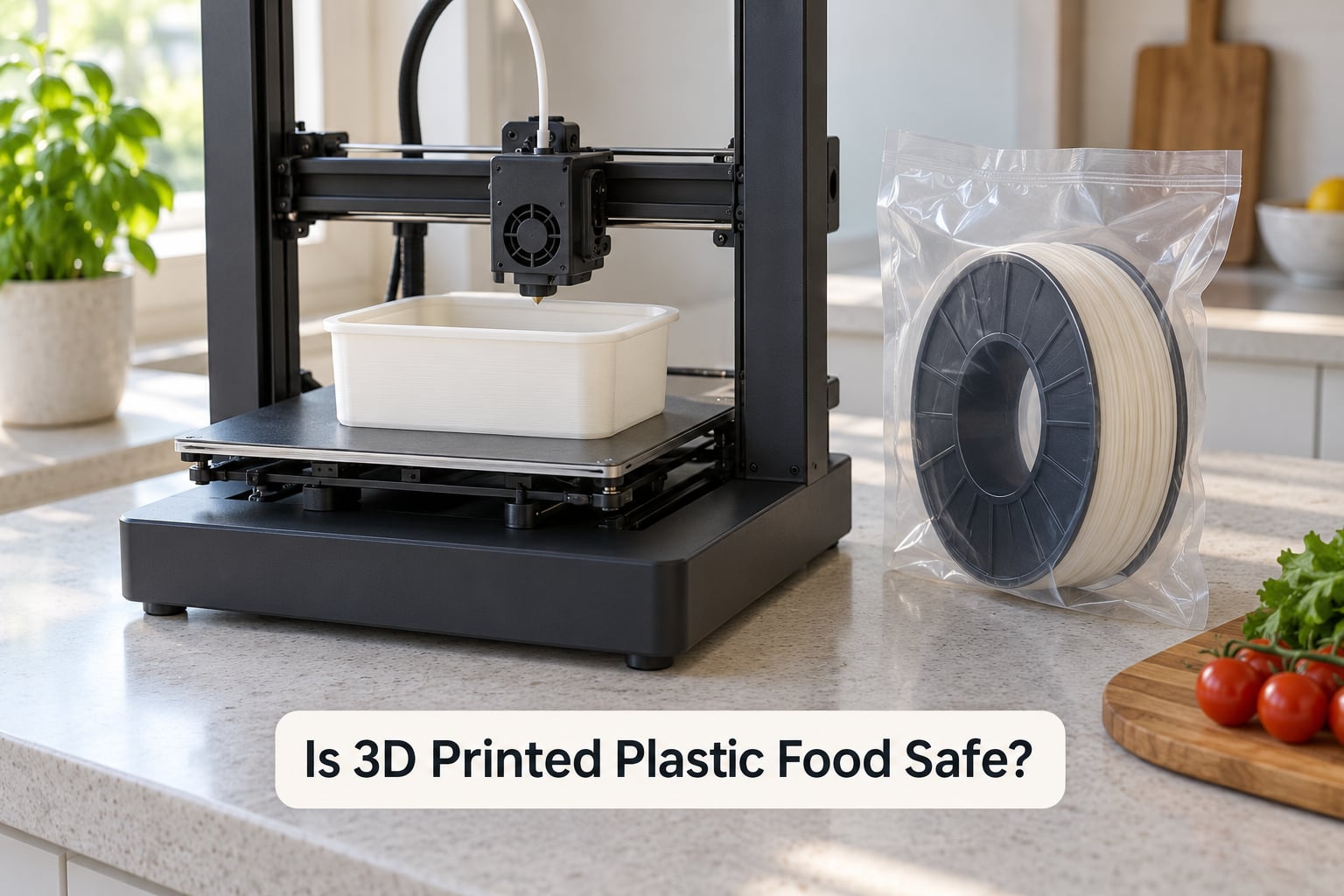
The short answer is that a print is food safe only when three things hold at once: the polymer has a genuine food-contact claim for your region, the surface is sealed or naturally non-porous, and the equipment cannot contaminate it. Miss any one of the three and the object is not food safe, regardless of how clean the filament looked when you opened the box.
That is why the process matters more than the shopping. Most filament spools carry a safety data sheet because suppliers are required to provide one, and plenty of brands print the word food safe on the box without any third-party test behind it.
What Makes 3D Printed Plastic Safe for Food Contact?
Food-contact safety means a material does not transfer harmful substances to food in amounts that risk health, under the intended conditions of use. That definition covers chemistry. It does not automatically cover hygiene, which is where most 3D printed parts fail.
Regulatory compliance and practical hygiene are separate tests. A polymer may hold FDA GRAS status, EU 10/2011 compliance, an NSF 51 listing, or an FCN food contact notification for a specific use, and the finished print can still be unhygienic because of its geometry.
Seven factors decide the verdict:
- Polymer composition and which additives went into the batch
- Pigments and dyes, especially in coloured filament
- Layer adhesion and the porosity between extrusion roads
- Contamination from a shared printer, enclosure, or brass nozzle
- Temperature exposure during use and washing
- Surface damage such as scratches and cracks after printing
- Cleaning method and contact time between uses
Is 3D Printed Plastic Food Safe? Material Options Explained
Most general-purpose filaments are engineered for strength and printability, not for contact with food. A few are sold with a food-contact claim. Here is how the common choices compare.
| Material | Food contact status | Max service temperature | Dishwasher | Main limitation |
|---|---|---|---|---|
| PLA | Base resin is generally accepted as food contact; coloured grades vary | Glass transition near 55-60 C | No, warps in hot water | Low heat tolerance, brittle layer bonding |
| PETG | Some grades carry a food-contact claim, check the packaging | Around 70-80 C | Top rack only, sparingly | Hygroscopic, absorbs water over time |
| ABS | Not recommended without a barrier coating | Around 95-100 C | Conditional, can warp | Styrene vapour during printing |
| ASA | Similar caution to ABS | Around 95-100 C | Conditional | UV stable but not food contact by default |
| Nylon 12 | Several grades marketed for food contact | Around 150 C depending on grade | Generally yes | Moisture sensitive, must be dried |
| TPU | Depends entirely on the formulation | Varies by grade | Varies | Flexible surface is hard to sanitize fully |
| Food-contact resin | Suitable when the formulation is certified | Post-cure dependent | Usually no | Handling, washing and curing must be controlled |
PLA is the one most people start with. The unmodified polymer is widely treated as food contact material, which is why it shows up in everything from takeout lids to clinical packaging. Add colour and the story changes, since pigments and impact modifiers vary by batch and by manufacturer.
Which 3D Printing Materials Are Best for Food Contact?
For dry, low-contact items such as cookie cutters, cake moulds, spacers and pantry scoops, undyed natural PLA printed on a clean machine handles real use well. Bakers on maker forums have run printed cutters for years, usually rinsing them or running hot water over them between batches, and the practical risk has stayed theoretical.
PETG is the better pick when moisture and wash cycles are frequent, provided you buy a grade that states a food-contact claim. It also prints with more layer adhesion than PLA, which narrows the crevice problem.
Nylon 12 takes heat far better and is offered in food-contact grades, but it absorbs water aggressively and has to be dried before printing, which adds steps to every session.
Photopolymer resin is the least straightforward. A resin only qualifies if the manufacturer states a food-contact formulation, and only if you wear gloves, wash the part fully after curing, and cure it completely. Uncured photopolymer can cause skin irritation, and a part cured on a contaminated build plate is not a food-contact part no matter what the bottle claims.
How Do You Make 3D Printed Plastic Safer for Food?
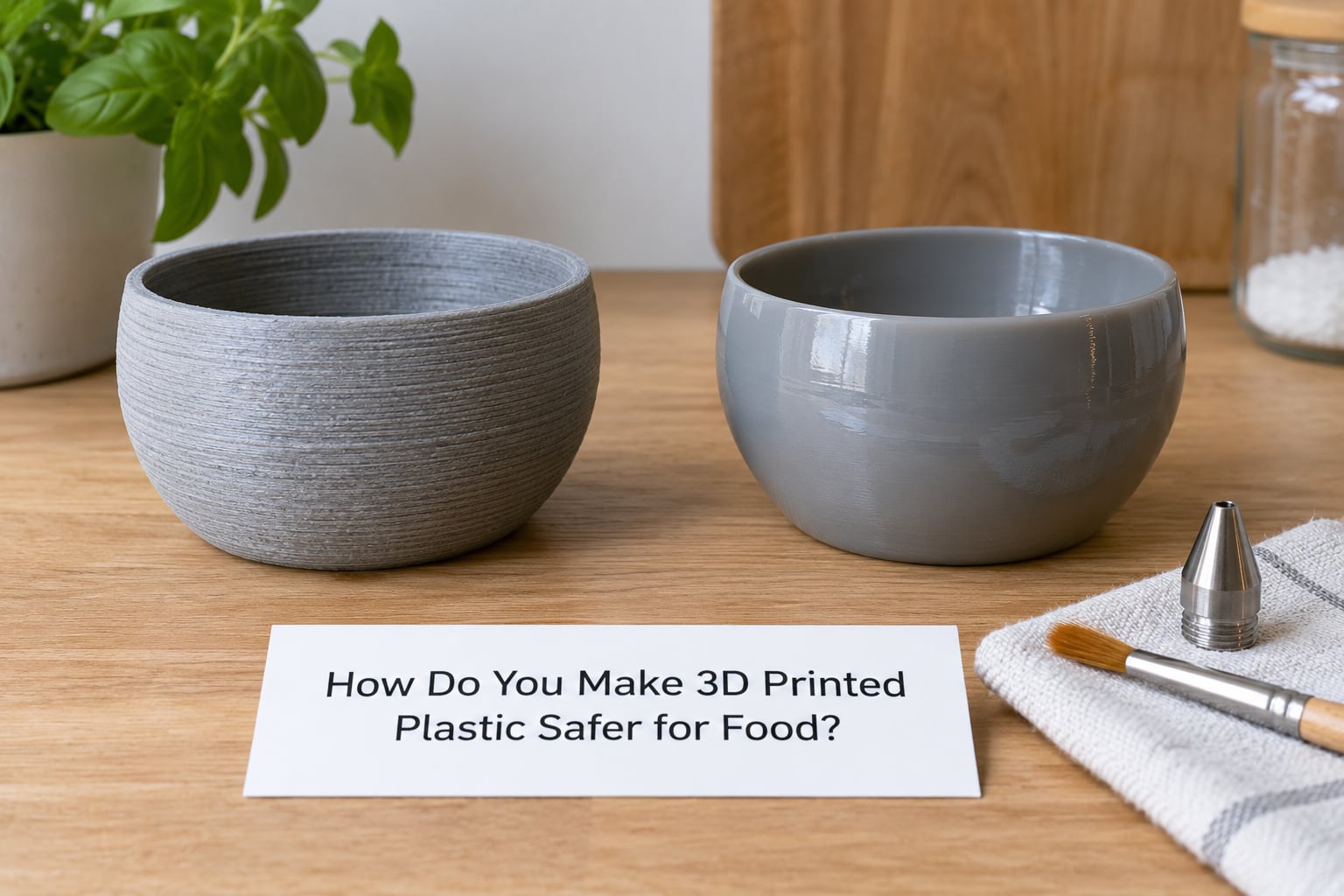
Six steps take a print from questionable to defensible. Skipping the middle ones is where most problems come from.
- Use undyed, certified material. Natural filament with no added pigments removes the largest unknown. Check whether the manufacturer documents a food-contact claim or a compliance statement rather than relying on the word printed on the box.
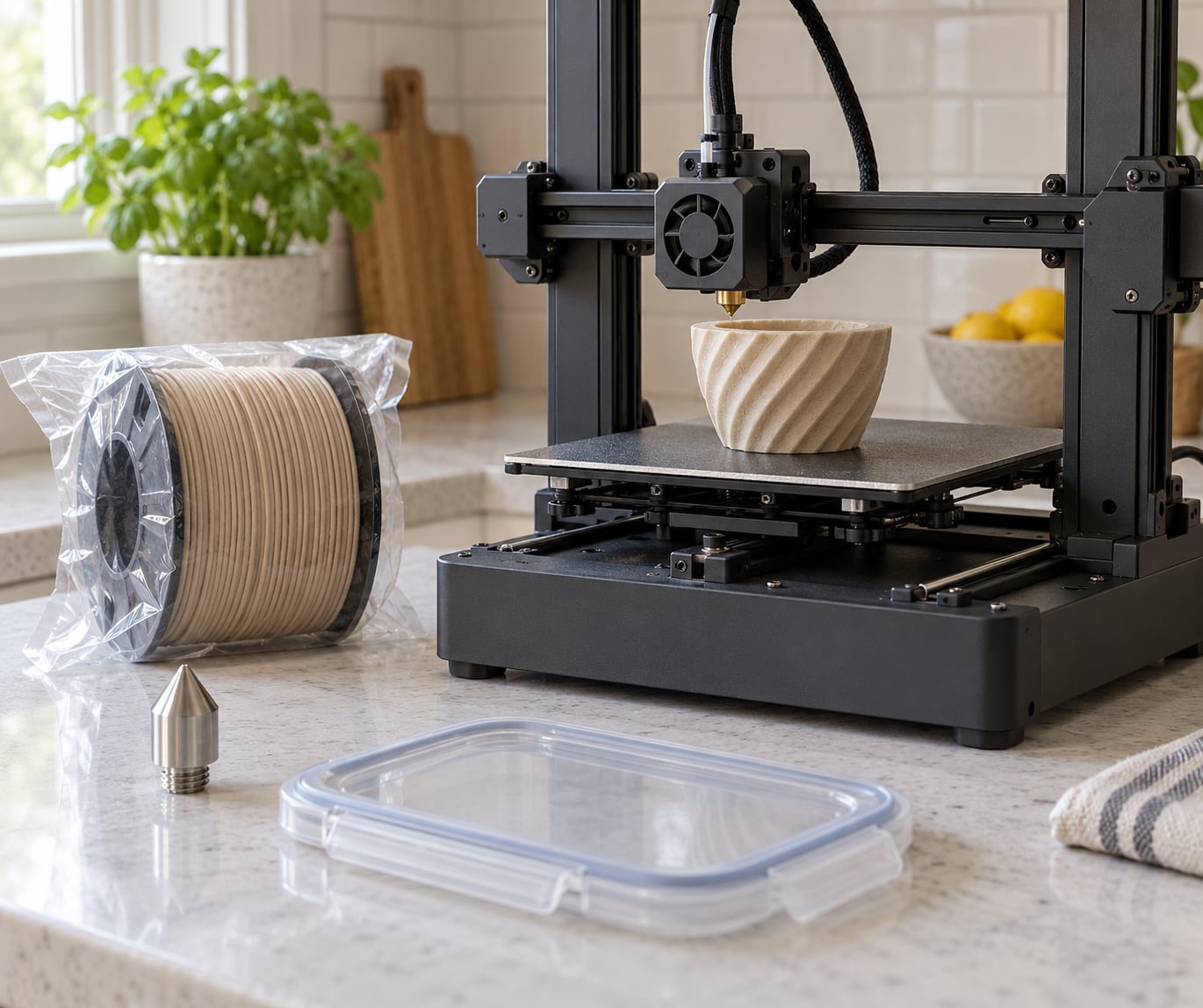
- Fit a stainless steel or hardened steel nozzle. Brass nozzles contain lead, and lead is one of the few metals that leaches. A steel nozzle costs little and removes the concern entirely.
- Print on a dedicated machine, or clean thoroughly first. A printer used for PLA and engineering resins carries residue in the hotend and the build surface. Wipe the plate, purge the hotend with the same filament you will use, and run a test coupon.
- Dry the filament before printing. Moisture causes stringing and bubbles between layers, which widen the gaps you are trying to avoid. Most dry boxes take a few hours at around 45-55 C.
- Tune for dense bonding, not speed. Raise the nozzle temperature within the filament’s range, print several solid wall loops, use a lower layer height, and avoid fans on the first few layers so the roads bond before they cool.
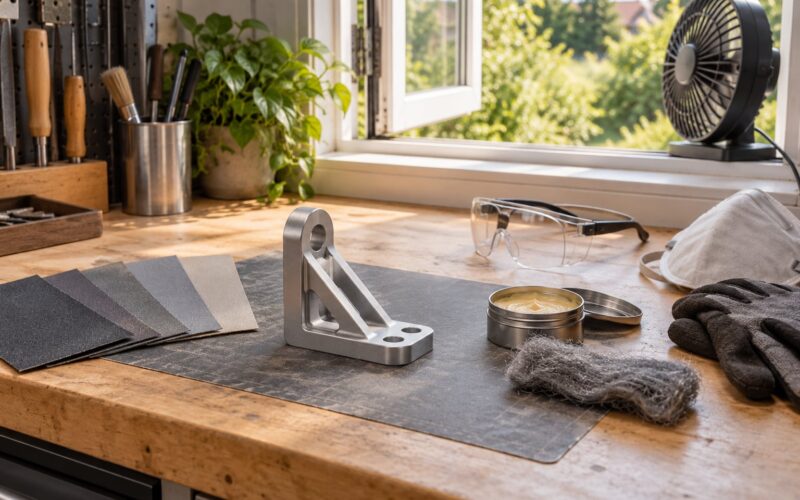
- Seal the surface when it matters. Sanding to a smooth finish followed by a food-grade epoxy coating, or a vapour polish on ABS, closes the pores. Inspect the finished part under light and reject any with cracks, voids, or exposed infill.
Can You Wash 3D Printed Food Containers?
Wash by hand, and treat the dishwasher as a risk rather than a cleaning method. Warm water with dish soap and a soft brush is the practical routine. For a sanitising step, a solution of roughly 200 ppm bleach held at room temperature for two minutes works, as does 70 percent isopropyl alcohol on compatible surfaces.
The problem is not the chemistry, it is coverage. Narrow valleys between layers, internal screw threads, lattice infill and blind corners trap residue that a brush cannot reach and a soaking bath cannot flush. One long soak will not sanitise a geometry that a dishwasher jet cannot either.
Wash dry items like cookie cutters and spatulas, drip dry them fully, and avoid the closed dishwasher for anything printed in PLA or PETG. Boiling water and heated detergent both distort geometry and open fresh crevices.
Is 3D Printed Plastic Safe for Hot Food and Drinks?
Heat resistance and food safety are different properties, and a part can survive the heat while still failing on chemistry. PLA begins to soften at its glass transition near 55-60 C, well below a dishwasher cycle or a mug of coffee. PETG holds to roughly 70-80 C, which is why it fares better but still warps in a hot wash.
Hot liquids add two problems. Thermal expansion at a thin wall can open gaps that did not exist at room temperature, and a drink sitting for an hour gives additives more time to migrate. Drinkware is the highest-risk use case of all, and it is the one most people try first.
Do not put printed parts in a microwave unless the material is explicitly rated for it, and never assume a heat-resistant print is chemically safe. If a cup or bowl is the goal, buy a certified one.
Why Is Layer Adhesion a Food Safety Concern?
Every layer leaves a valley, and the size of that valley depends on printing choices rather than on the filament alone. Under-extrusion leaves gaps. A high fan speed cools the roads before they fuse. Sparse infill and thin walls leave voids in the interior. A cold chamber does the same thing all night.
Those valleys are where food particles lodge and biofilm establishes. A print can look smooth in a photograph and still have open gaps under magnification, which is why inspection under raking light matters more than the finish on the camera.
Published work on sanitising 3D printed surfaces, including a study shared on r/3Dprinting, found that washing printed parts can be acceptable in practical terms. That result assumes solid geometry, correct settings, and no deep crevices. It does not transfer to a lattice-filled container.
Is 3D Printed Plastic Food Safe? Risks and Limits
Several risks sit outside the material itself, and they are where caution pays off.
- Unknown additives. Impact modifiers, UV stabilisers and pigments are often proprietary. A safety data sheet describes hazards, not food-contact suitability.
- Mixed and recycled feedstock. Recycled and blended filament can contain an unknown mix of polymers with no coherent food-contact status.
- Cross-contamination. A shared printer moves risk through the hot end, the plate, and the enclosure. Some makers in r/3Dprinting post outright warnings against printed drinkware on that basis.
- Microplastics. Washing and repeated abrasion shed particles from polymer surfaces, including from ordinary plastics. Keep printed parts out of situations where shed material would be swallowed.
- Heat and UV degradation. Repeated hot cycles and sunlight embrittle the surface and create new microcracks.
- Damage with age. Once a print is scratched, gouged or delaminated, the smooth surface is gone and so is the case for calling it food safe.
Commercial containers carry independent certification for a defined use, a controlled factory process, and a surface with no layer valleys at all. If an item holds food for more than a few minutes, that is the more reliable choice.
Frequently Asked Questions
Is PLA safe for food containers when printed on a 3D printer?
The PLA resin itself is generally accepted for food contact, so the polymer is usually not the problem. The printed surface is. Layer valleys trap residue, a coloured pigment may not be food contact, and a brass nozzle can introduce lead. Use undyed filament, a stainless steel nozzle, dense wall settings, and a sealing coat if the part will hold food.
Are food-safe 3D printing resins actually safe after curing?
They can be, when the manufacturer states the formulation is certified for food contact and you follow the full workflow. Wear gloves during handling, wash the part thoroughly after printing, and complete the recommended UV and thermal cure before any contact with food. Skip a step and an inert cured part is still a skin irritant.
Can 3D printed dishes go in the dishwasher?
Rarely, and not in PLA. Dishwasher cycles exceed the glass transition of PLA near 55-60 C and soften PETG around 70-80 C, so parts warp and lose shape. Heat also opens fresh crevices. Hand washing with warm soapy water, thorough rinsing, and full air drying is the realistic routine for a printed dish.
Are 3D printed coffee filters and utensils safe to use?
They work in practice, especially in undyed PLA or PETG with a stainless steel nozzle, and many makers use printed coffee scoops and strainers long term. Wash by hand rather than in a dishwasher, dry fully, and replace anything scratched or badly layered. Treat any part that holds liquid against the mouth as the highest-risk case.
Does food-grade filament make the finished 3D print food safe?
No. Food-grade filament tells you the raw material qualifies for food contact in its supplied form. Printing adds surface geometry, contamination from the machine, heat history, and potential colourants. A verified filament on a clean printer with correct settings and a sealed surface is a safer combination than a certified filament printed carelessly.
Conclusion
Start with verified food-contact material and a controlled printing process: undyed filament, a stainless steel nozzle, a clean dedicated machine, dense walls, and a sealed surface where food will sit. For short contact on dry items that works well. For cups, bowls, or anything a small child eats from, buy a certified container and save the filament for the parts that never touch food.