A 3D printing career means any professional role where additive manufacturing is a daily tool, and almost none of them are called 3D printers. The job titles you will actually see are CAD designer, additive manufacturing technician, print or process engineer, materials engineer, scanning specialist and service bureau operator. Here are the main routes, what each one involves, and how to get onto one of them.
One warning before we start. Almost nobody owns a printer and gets hired for it. What gets people hired is the combination of running machines and being able to design, or of knowing materials and quality systems. These 3D printing career paths, explained as a set of routes, lead to very different places, and the money sits in a different spot at each stage.
Table of Contents
- What Are the Main 3D Printing Career Paths?
- The 3D Printing Career Paths Explained in One Table
- Production and Machine Operation
- Engineering and Technical Specialist Roles
- Design, Software and Scanning Roles
- Materials, Testing and Quality Roles
- Which 3D Printing Career Path Fits You?
- What Skills Do You Need for a 3D Printing Career?
- What Education or Training Do Employers Expect?
- How Do You Get Experience Without a Printing Job?
- How Do You Start a 3D Printing Career Path?
- How Much Do 3D Printing Jobs Pay?
- What Is the Career Outlook for 3D Printing?
- Frequently Asked Questions
- Do you need a degree to work in 3D printing?
- What is the easiest 3D printing career to enter?
- Are 3D printing certifications worth it?
- Can you work in additive manufacturing remotely?
- How can someone switch careers into 3D printing?
- What should I include in a 3D printing portfolio?
- Conclusion
What Are the Main 3D Printing Career Paths?
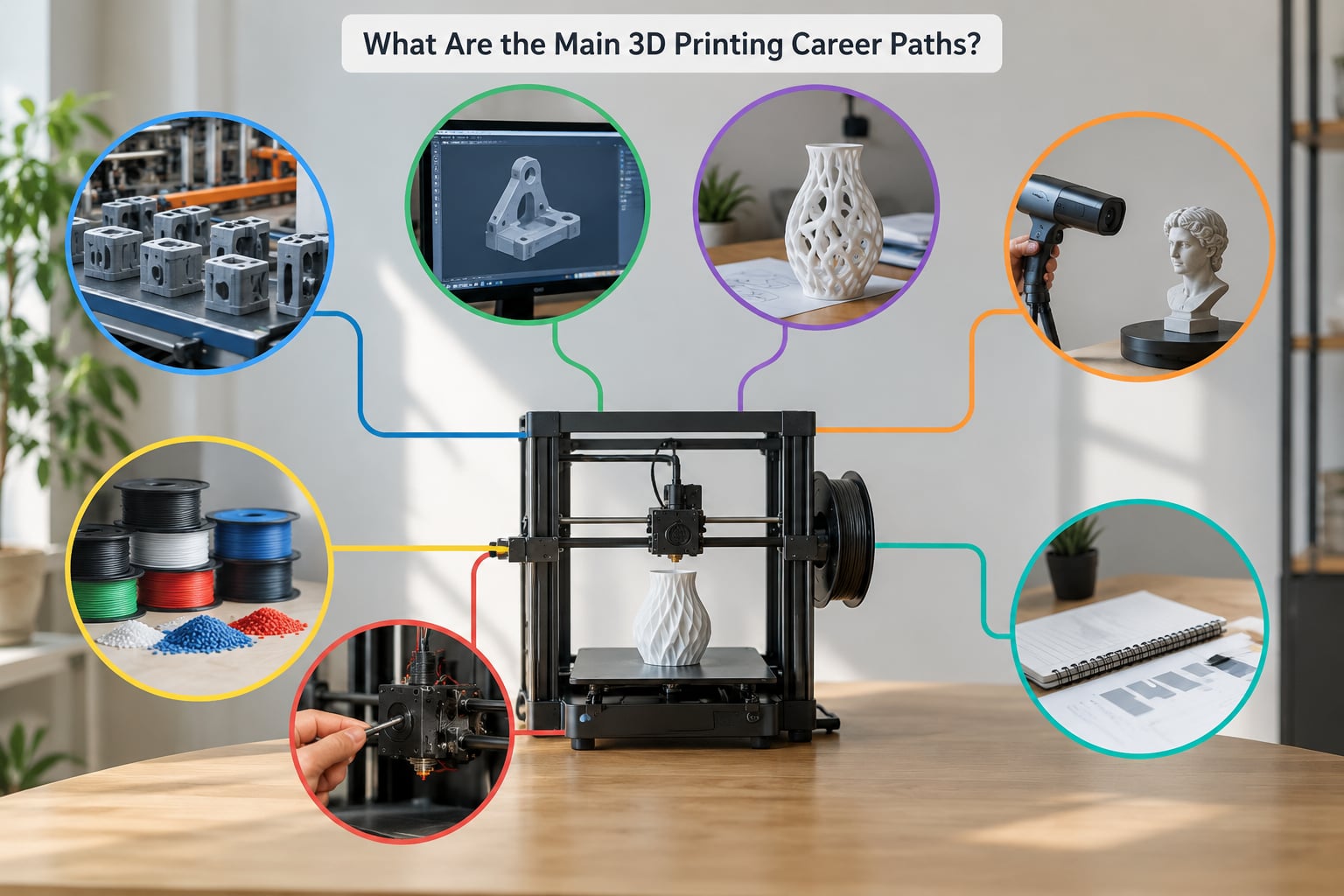
There are three layers, and every path sits inside one of them. The design layer builds the model, the production layer runs and finishes the part, and the support layer does everything around it: materials, scanning, quality, sales and training. Paths are built by picking a layer first, then a sector such as aerospace, medical devices, automotive tooling or consumer products.
Worth clearing up early: the seven ASTM process categories are a process taxonomy, not a job taxonomy. FDM, SLA, SLS, SLM/DMLS, material jetting, binder jetting and electron beam melting describe how material is deposited, not what somebody does all day. Knowing the seven process types helps you read a job posting; it does not by itself tell you which career you want.
The 3D Printing Career Paths Explained in One Table
| Path | Daily work | Entry barrier | Indicative entry band (USD) | Time to competence |
|---|---|---|---|---|
| AM technician / machine operator | Load builds, monitor prints, change material, clear supports, inspect parts | Low | 45,000-60,000 | 6-12 months |
| CAD / product designer | Model parts, apply design for additive manufacturing, own tolerances | Medium | 60,000-85,000 | 1-3 years |
| Print / process engineer | Set parameters, qualify new materials, cut scrap and cycle time | High | 75,000-100,000 | 2-4 years |
| Materials / quality engineer | Test coupons, run material qualification, write process specs | High | 80,000-110,000 | 2-4 years |
| Scanning / reverse engineering | Digitise existing parts, build reference models, align scans to CAD | Medium | 55,000-80,000 | 1-2 years |
| Service bureau / owner | Quote jobs, schedule machines, manage finishing and shipping | Variable | Owner-dependent | Immediate, ongoing |
Production and Machine Operation
This is the shortest route in and the one most people picture first. An additive manufacturing technician loads builds, checks the first layers, swaps material, removes supports and hands parts to finishing. The ceiling is set by post-processing: support removal, curing, sanding, tapping and finishing are where skill actually shows.
The work is more physical than people expect, and much of it happens at a desk managing queues. From r/3Dprinting, the recurring complaint is not that the work is hard but that it can feel like paid assembly of parts you did not design. If that bothers you, ask specifically about how much of the job is support removal and finishing versus watching a machine.
Engineering and Technical Specialist Roles
Engineers own the process window. An additive manufacturing engineer decides build orientation, layer height, hatch spacing and support strategy, then proves a material will work on a qualified machine. An applications engineer sits closer to the customer, running trials and turning a failed part into a successful one.
Entry barriers here are real. Most postings want a mechanical, materials, manufacturing or aerospace engineering degree, and regulated sectors such as medical devices and aerospace add clearance and quality-system requirements. Forum posters with a mechanical degree who can both design and fabricate consistently report the strongest offer options, which tells you the combination is what is being bought.
Design, Software and Scanning Roles
Design is where the money is most reliably earned and the most work exists. A CAD or product designer owns the model, the tolerances and the printability decisions. Design for additive manufacturing, or DfAM, is the bridge skill: knowing which features the process can produce cleanly and which ones are cheaper to machine.
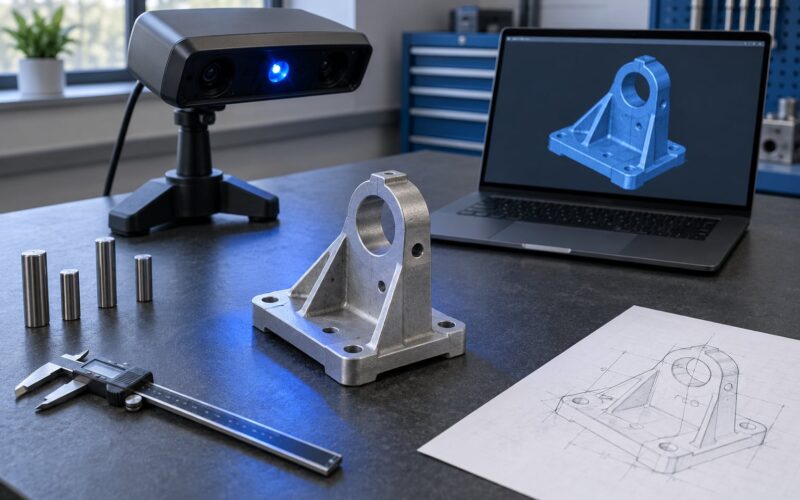
Scanning and reverse engineering sit alongside. A scanning technician digitises an existing part, aligns the scan to CAD, and produces a reference mesh. Software roles extend further still into slicer and print-path development, simulation and mesh repair tooling. A caution that came up repeatedly on r/Fusion360: CAD is a skill, and the career behind it varies enormously, so pick an industry to point the skill at.
Materials, Testing and Quality Roles
These roles sit closest to the physics. Materials specialists and metallurgists characterise feedstock, run coupons, watch for powder reuse issues and qualify new alloys. Validation engineers write the process specs that a regulated company will be audited against later, and quality managers own the paperwork behind it.
Bioprinting and tissue engineering form their own branch, usually attached to a university or hospital hub. Job listings in that field ask for biomaterials or tissue engineering study, printer operation competency, post-processing machine competency, and often organs-on-a-chip experience. A masters degree is common there, and the pay sits closer to research than to production.
Which 3D Printing Career Path Fits You?
Match your temperament first, then your CV. If you like taking things apart and finishing them, production is the fast fit. If you would rather sit with a spec and a failure until it works, process engineering suits you. If you enjoy the model itself, design. If you enjoy explaining, applications engineering and technical sales are underused routes.
Working out the match takes one honest question: which part of a failed print annoys you more, the reason it failed or the fact that you have to clean the supports. If it is the first, go technical. If it is the second, go design or service bureau work. It sounds glib and it works far better than a personality quiz.
Second question: how much do you want to be alone. Production roles are on the floor with people around you all day. Design work is the most defensible remote path in the field, with scanning and technical writing next. Everything else in this field is on-site, because the machines are.
What Skills Do You Need for a 3D Printing Career?
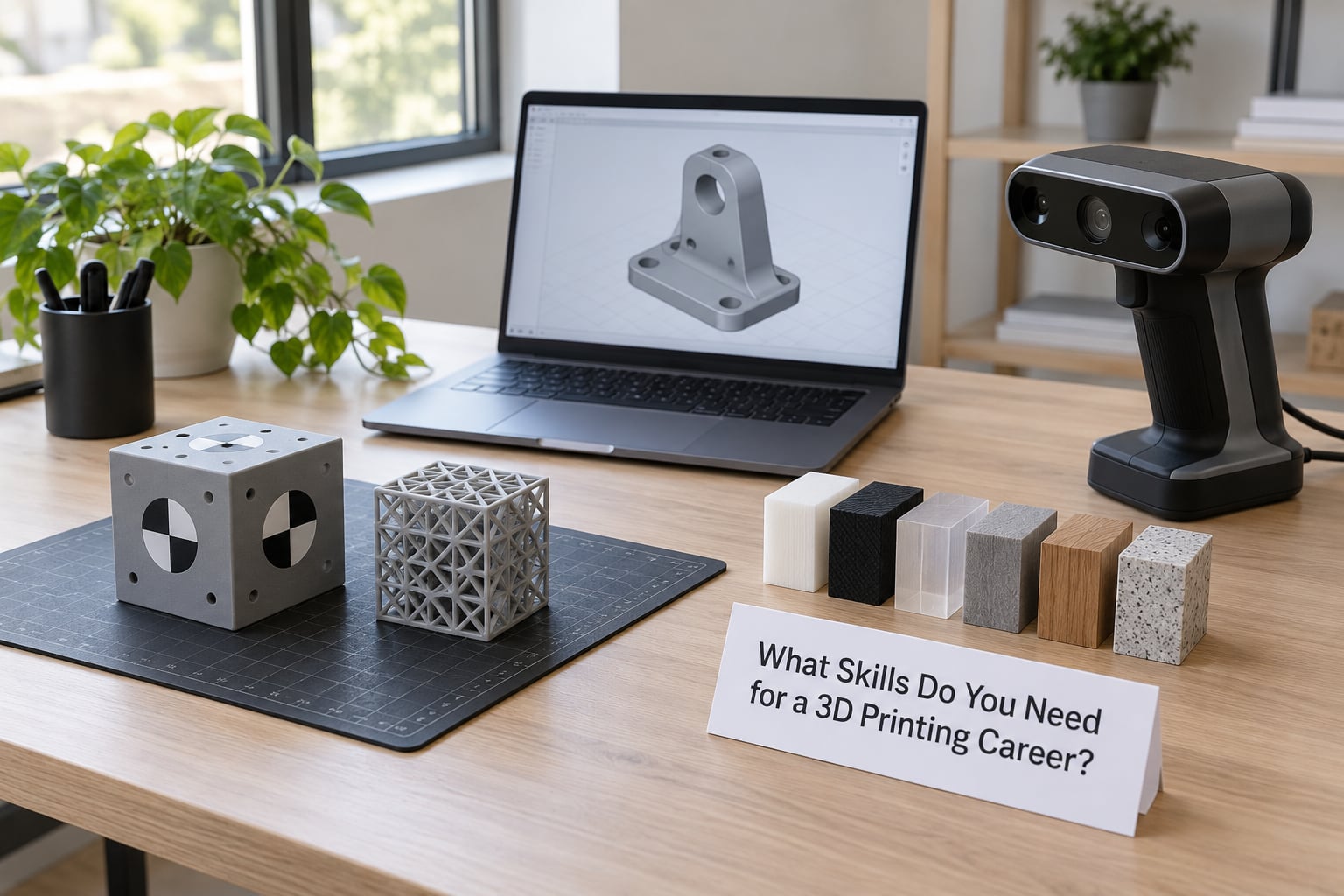
Design for additive manufacturing is the single most valuable bridge skill, and it is learnable in a weekend. Most designer roles list Fusion 360, SolidWorks, Onshape or Blender. Most technician roles list Cura, PrusaSlicer or Bambu Studio. Learn one CAD package properly and one slicer properly rather than sampling four of each.
Manufacturing fundamentals matter even when you never touch a lathe. GD&T, tolerance stack-up and metrology are what separate someone who prints parts from someone who can specify them. On the production side, knowing what resin curing, powder handling and support strategies do to a part is what makes you promotable.
Two softer skills get mentioned more often than candidates expect. First, documentation: process notes, build logs and failure write-ups are how an organisation learns anything. Second, the ability to explain a decision to someone who does not print, which is most of what an applications engineer or a service bureau owner does all day.
What Education or Training Do Employers Expect?
There is no single degree called 3D printing. Job ads for most 3D printing career paths expect one of three things: a technical qualification for technician work, a mechanical or materials engineering degree for engineer roles, or a design qualification plus demonstrable software skill.
Two-year additive manufacturing technician programmes at technical colleges are the cheapest reliable route into production work, and the ones that include hands-on machine time are worth far more than the ones that are mostly theory. University AM centres, Ohio State University’s Centre for Design and Manufacturing Excellence being the most-cited example, let you combine a real engineering degree with lab access and often funded research projects.
Certifications carry less weight on their own but they do something: they prove you can be assessed. CAM-T, the Certified Additive Manufacturing Technician credential, is aimed at technicians and operators. The FAA’s additive manufacturing certification pathway matters in aerospace and defence, where it signals you understand certification-grade work. Neither replaces a portfolio, and employers say so.
Bootcamps and short courses are useful for one specific purpose: converting existing skill into AM-relevant skill. A machinist who takes a six-week CAD and DfAM course now has a different CV. Someone starting from zero usually needs the longer technician route instead.
How Do You Get Experience Without a Printing Job?
Build evidence, not certificates. A portfolio of four finished parts, each with a photo, a slice profile, a time estimate and an honest note about what went wrong, beats any course completion badge. Pick parts that show thinking: a lattice that fills evenly, a bracket with support strategy explained, a scan-to-CAD alignment.
Shared facilities and makerspaces solve the machine access problem cheaply. Many public libraries now carry printers, and university labs sometimes run open print nights. Events do two jobs at once: you get to see industrial machines in the metal and you meet the people who hire in the field.
For the freelance route, start with one to ten small jobs a week through local makerspaces, small engineering consultancies and service bureaux rather than a bidding platform. On r/3Dprinting the recurring question is which platform to bid on print jobs through, and the honest answer is that general marketplaces exist (Cults 3D, MyMiniFactory, Fiverr, Upwork, Treatstock, Hubs) but the volume is thin and heavily price-competed.
How Do You Start a 3D Printing Career Path?
Pick one path and go narrow. Apply to a hundred roles spread across six titles and you will read six hundred job descriptions with no evidence behind you. Apply to one title in one sector with four portfolio pieces aimed at it.
Then work the sequence. Learn the core tool for that role, build one project that proves it, write the notes, get it reviewed by someone already doing the job, and only then apply. Networking here is not networking. It is showing a stranger your part and asking what they would change.
Interview prep is mostly domain questions: why this layer height, what happens with support removal in this orientation, how would you qualify a new material on an existing machine, what would you standardise on if you had a fleet of five. Prepare three of your own failures in detail. That question comes up constantly and most candidates answer it vaguely.
How Much Do 3D Printing Jobs Pay?
The figures below are indicative United States ranges assembled from job-board postings and the Alexander Daniels Global AM Salary Survey. They vary with region, sector and employer size, and they move every year, so treat them as a range rather than a promise. Salary is one of the most searched parts of this field, and undated numbers are worthless.
| Path | Entry-level (USD) | Mid-career (USD) | Senior (USD) |
|---|---|---|---|
| AM technician / operator | 45,000-60,000 | 60,000-80,000 | 85,000-105,000 |
| CAD / product designer | 60,000-85,000 | 85,000-115,000 | 115,000-145,000 |
| Print / process engineer | 75,000-100,000 | 100,000-130,000 | 130,000-165,000 |
| Materials engineer | 70,000-95,000 | 95,000-125,000 | 130,000-160,000 |
| Scanning / reverse engineering | 55,000-80,000 | 80,000-105,000 | 105,000-130,000 |
| Applications engineer / technical sales | 60,000-85,000 | 85,000-120,000 | 120,000-160,000 |
For reference points outside the table: ZipRecruiter has listed an average near 51,890 USD for additive manufacturing professionals, and a median near 65,300 USD for 3D printing roles. Posted ranges for senior AM engineer roles in Southern California have run as high as 130,000-165,000 USD. Consulting is the outlier: technical service work has been advertised from roughly 134 to 516 USD per hour, and design consulting around 403 USD per day, which mostly reflects who is doing the contracting rather than the market rate.
Self-employment runs on different arithmetic. Charge three to five times material cost plus print time plus labour, and target a net margin near 20% once you account for failed prints and machine time you cannot sell. A prosumer FDM machine on its own is a hard income generator. The consistent view across r/3Dprintingbusiness threads is that design income beats physical print income, because the design sells repeatedly and the print sells once.
What Is the Career Outlook for 3D Printing?
Hiring has cooled, and anyone telling you the field is booming at the entry level is selling you something. The most recent AM Salary Survey Report recorded roughly 76,000 new professionals entering additive manufacturing during the year it covered, about 10,000 fewer than the previous year, with North American hiring down around 14%, EMEA down 21% and APAC down 18%.
One segment kept growing: service bureau work, up roughly 12% year on year in the period the survey covered. So the shortage story and the openings story are both true. Supply of interested people rose while the number of jobs fell, and the gap is concentrated in the middle, where people who can operate machines but cannot design are squeezed out. Post-processing, support removal and materials knowledge are what keep someone on the list.
Enterprise adoption is still the quiet engine behind regional hiring. Industrial desktop additive manufacturing moved into factories for jigs, fixtures, grips and low-volume parts, and each adoption site needs someone to run it. Roles cluster by sector: aerospace and defence for qualified metal work, medical for regulated polymer and bioprinting, automotive and consumer electronics for high-volume desktop fleets, education for lab and teaching posts.
Frequently Asked Questions
Do you need a degree to work in 3D printing?
Not for production roles. Machine operator and AM technician jobs are the most open to people without a degree, particularly through two-year technical college programmes and employer-trained apprenticeships. Engineer roles almost always want a mechanical, materials, manufacturing or aerospace degree, and regulated work in medical devices or aerospace adds further requirements on top. What matters more than the credential is the evidence: four finished parts with documented settings will carry a non-degree candidate further than any certificate alone.
What is the easiest 3D printing career to enter?
Service bureau work is the easiest to enter because you can start without an employer, and production technician work is the easiest salaried route because it needs the least formal education. Both have lower ceilings than design or process engineering, so treat either as a first two years rather than a destination. The important detail is that employers repeatedly ask for candidates who can both run machines and design, which turns an easy entry into a real career faster.
Are 3D printing certifications worth it?
Worth it for what they prove, not what they teach. CAM-T signals to employers that a technician can be assessed against a standard, and the FAA additive manufacturing pathway carries real weight in aerospace and defence hiring. Neither replaces hands-on ability or a portfolio, and most hiring managers treat them as a tie-breaker rather than a filter. If you cannot afford the exam fee, spend that money on filament, a better printer or a course that teaches design for additive manufacturing instead.
Can you work in additive manufacturing remotely?
Mostly not. The machines are on a floor and the roles built around them are on-site. The realistic remote paths are CAD and product design, technical writing and documentation, scanning services run as a remote workflow, and technical sales or applications work that is partly travel. Freelance design for clients also runs remote. If you need a fully remote job today, design is the way into this field rather than production or process engineering.
How can someone switch careers into 3D printing?
Route from what you already do rather than starting over. Graphic and product designers should learn design for additive manufacturing and target CAD roles. Machinists, welders and CNC operators already have tooling discipline and should add CAD plus a DfAM course, then aim at technician or process roles where their floor experience is an advantage. Engineers from any discipline need material and process fundamentals. Healthcare and science graduates fit bioprinting, validation and medical device roles, where regulated experience counts for more than any 3D printing credential.
What should I include in a 3D printing portfolio?
Four to six finished projects beat a long list of half-finished ones. For each one include a clear photo, the CAD file or model, the machine and material, the key slice settings, build time, and an honest paragraph on what failed and what you changed. Show at least one scan-to-CAD project and one part where you had to design around the process limits. Label everything with your role and the decision you made, because that is what an interviewer is actually reading.
Conclusion
This field rewards people who can do two things rather than one. The single decision to make this week is which layer you are claiming: design, production or support. Then name three target job titles from the ones above, pull ten real postings, and let the requirements of those postings rewrite your plan. Start one portfolio project tonight, with photos and notes, because that artifact is what separates every candidate in 2026 from the rest.