To find 3D printing customers locally, you need to show up in the places buyers in your own city already look, then prove you can do the specific job they need. That means claiming your local search listing, publishing a portfolio of real prints, approaching nearby businesses with a concrete offer, and asking satisfied customers for introductions. Most of the first three months is setup, not selling.
The reason local beats chasing distant online orders is simple. Someone who needs a broken appliance part this week does not care about your shipping times, because they cannot have them. They want a printer who is accountable, close enough to hand the part over, and still printing in two years when the second one breaks.
Here is the sequence I would follow, in order. It assumes you already own at least one working printer and know how to use it. Nothing here needs a storefront, a business license, or advertising budget to start, though rules about selling vary by state and country.
Table of Contents
- What You Need
- Step-by-Step
- Step 1: Define Your Service and the Problems You Solve
- Step 2: Build a Small Portfolio of Relevant Work
- Step 3: Research where to find 3D printing customers locally
- Step 4: Contact prospects with a Specific Offer
- Step 5: Qualify the Project Before Quoting
- Step 6: Use Samples, Pilots, and Referrals to Reduce Buying Risk
- Step 7: Follow Up and Build Repeat or Referral Business
- Common Mistakes
- Frequently Asked Questions
- What kind of local customers are most likely to hire a 3D printing service?
- How much should I charge for a small 3D printing order?
- Should I provide a free sample to win local customers?
- Which local businesses are most likely to need 3D printing?
- How do I turn one successful project into repeat customers?
- Can I find 3D printing customers without paid advertising?
- Conclusion: Start with One Ideal Local Customer
What You Need
You need seven things before you contact anyone, and most of them cost nothing but an afternoon.
- A clearly defined service. Not “3D printing” but “same-week functional parts in PETG and ABS for HVAC and appliance repair, plus finished display models”. Narrow beats broad because buyers already know what they need.
- Equipment matched to that service. Know which materials your machines handle well, your real layer-height and tolerance range, and your honest maximum build size. Overpromising here is the fastest way to lose a first customer.
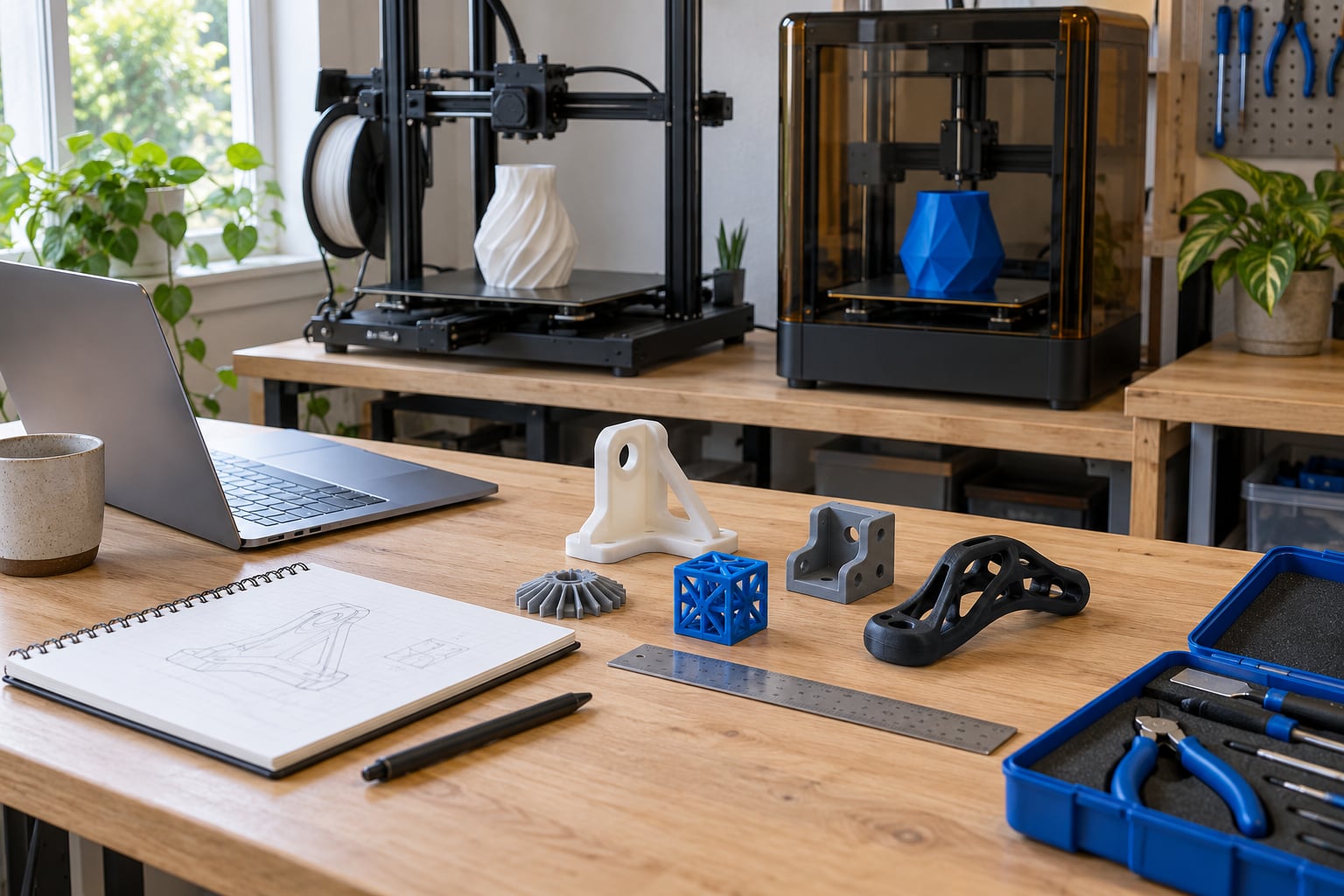
- A small portfolio. Three to five photographs of parts you actually made, ideally including one that solved a real problem.
- Real contact details. A phone number that a person answers, an email address on your own domain, and a stated service area. A Gmail address and a burner phone read as temporary to a business buyer.
- Pricing guidance. Even a rough formula so you can quote in minutes instead of days. Buyers compare turnaround first and price second, but they compare price against something.
- A written sample policy. Say up front whether you offer a paid pilot, a discounted first run, or no free samples, and what happens to the file afterwards.
- A simple tracking tool. A spreadsheet with columns for company, contact, date, status, quoted amount and next action date is enough. The value is in the next-action column, not the software.
Forum threads about starting a print business keep returning to the same two blockers: no credibility, and no follow-up. Both are fixed by the list above, and neither requires a new machine.
Step-by-Step
Seven steps, roughly in the order that produces results fastest. The first two happen at your bench, the middle three happen on the phone and in the spreadsheet, and the last two decide whether you have a business or a busy hobby.
Step 1: Define Your Service and the Problems You Solve
Narrow your offer to one industry and one job type, then write the customer benefit in a sentence a non-maker would understand. “Replacement brackets for commercial coffee equipment, printed in PETG, ready in three working days” lands. “High-quality additive manufacturing solutions” does not.
Then list the organizations within a realistic travel radius. A half-hour drive is a service area; three hours is a destination for occasional pickup, not a selling point. Most local print businesses succeed inside one metro area, and buyers outside it rarely care that you exist.
Success signal: you can name the intended customer, the deliverable they need, and the reason they would buy from you instead of a hobbyist down the street.
Step 2: Build a Small Portfolio of Relevant Work
Show capability with a few strong examples, even when you printed them yourself because nobody paid you. Self-initiated work is not a weakness here, it is proof that you can finish a part end to end.
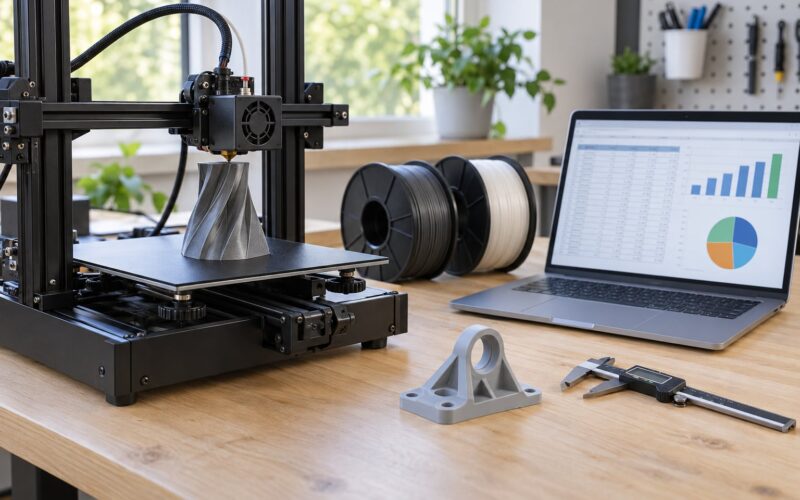
Document each one: the problem, the process, the material, the surface finish, the tolerances, and what changed as a result. A part photographed on a plain background next to a ruler or a coin is more credible than the same part shot at an angle on a cluttered bench, because the scale reference tells a buyer whether it will fit their machine.
Resist shooting fifty photos of the same shape. Three documented jobs beat thirty identical cubes, and a buyer who recognizes their own problem in one image is already halfway to asking for a quote.
Success signal: a prospective buyer can look at the page for ten seconds and tell you are the person who solves their specific problem.
Step 3: Research where to find 3D printing customers locally
Compile your prospect list from the sources that actually produce local work: business directories and chamber-of-commerce member lists, industry associations and trade groups, maker communities and local hobbyist groups, exhibition exhibitor lists, and business-to-business sourcing platforms. In the United Kingdom and Europe, local classifieds such as Wallapop, Leboncoin and Kleinanzeigen play the role Facebook Marketplace plays in North America.
Prioritize with three filters. First, proximity: a company within your delivery radius. Second, evidence of need: a visible gap you can fill, such as an obsolete replacement part, an oversized tool, or a product line that has moved to off-shore production and now needs small runs. Third, decision speed: a business where one person can approve a small order without a committee.
Track everything in one place. Company name, contact person, what you think they need, the date you noted them, status, and the next action date. If a prospect does not come up on the next-action date, they are not a prospect, they are a wish.
Success signal: you have a written list of 20 named local organizations with a reason attached to each, not a folder of business cards you never looked at.
Step 4: Contact prospects with a Specific Offer
Generic outreach is ignored because it is obviously mass-sent. Reference something you actually noticed: their broken model, the discontinued part, the prototype their team mentioned in a job posting, or the fixture they described in a forum post. Then offer one specific next step.
A short email that works: “I read that your repair shop is dealing with the same mounting bracket issue on the older units. I print PETG replacement brackets to order, finished in three working days, and I have attached a photo of one I made for a similar machine. Would a single sample bracket be useful for you to test this week?”
Keep it under a hundred words, attach one relevant image rather than a gallery, and reply to every enquiry within the same working day. Slow responses lose jobs to faster local competitors, and speed is the cheapest competitive advantage available to you. One printer shop in every city has a mediocre website and answers its phone quickly; match that, do not try to outspend it.
Success signal: replies and booked consultations are counted, not sent messages, and each prospect gets a different message.
Step 5: Qualify the Project Before Quoting
A quote without technical detail is a guess, and guessing costs you the job or the margin. Establish the application and how the part is used, the overall and critical dimensions, the material, the quantity, the load and temperature it will see, the accuracy and tolerance that actually matter, the deadline, the surface finish, the files you will receive, and who owns the design.
Accept STL for geometry-only work and ask for STEP when you may need to modify the part, since mesh files carry no parametric history. Clarify ownership in writing: the customer keeps the rights to their own CAD, and you keep the right to print the part for them. Ask whether the design came from a purchased model library, because printing a copy of someone else’s design and selling it is a different activity from printing a customer’s own part, and licensing terms govern what you are allowed to do.
Put your assumptions in the quote itself. When both sides agree on the material, the tolerance, the finish and the quantity before the number appears, the number holds.
Success signal: the customer confirms the assumptions in writing and nobody is surprised at delivery.
Step 6: Use Samples, Pilots, and Referrals to Reduce Buying Risk
A new supplier is a risk, and a sample is the cheapest way to shrink it. Offer a paid pilot run at a small quantity so the risk sits with the customer and the relationship still earns you something. Reserve free samples for genuine B2B partners, and cap them at one per organization, because hobbyists will happily collect them indefinitely and that business never converts.
An on-site or video call beats a sample when fit matters more than finish. For a shop that needs a jig or fixture, fifteen minutes in their workshop tells you more than a week of email about tolerances.
Give every pilot a follow-up date at handover: a week after delivery to ask how it performed, a month after to ask whether they want a repeat quantity or a related part. And when a customer is delighted, make the introduction easy by naming the kind of company you want them to mention you to, rather than asking generally for referrals.
Success signal: at least one pilot converts into a second order, or into a named introduction you can contact.
Step 7: Follow Up and Build Repeat or Referral Business
Most local print work is one-off because nobody asks twice. Build the second conversation into your process: record every outreach with its status, schedule follow-ups at defined intervals such as three and ten days, then stop.
After delivery, ask two questions. Did it fit and perform as expected, and is there a related part you should know about? Feedback requests that ask a specific question get answers; generic ones get silence. Use those answers on your listing, where verified reviews on a local business profile move you up the local results that buyers actually see.
Watch for repeat-order signals: a quantity that grew, a second part on the same machine, a colleague referred to you, a request for a rush turnaround. Those four patterns tell you where the durable revenue is, and they tell you what to print next.
Success signal: enquiries continue arriving after a delivery, not only before one.
Common Mistakes
Selling printing before you understand the application. Fix: ask what the part does, not just what it looks like. A bracket in a hot environment and a display model in an office are different jobs with different materials, and guessing wrong wastes both jobs.
Contacting every business in the phone book. Fix: qualify before you write. A prospect without a plausible need costs you a contact, a follow-up and a week, and every one of those three could have gone to a qualified account.
Quoting from a photograph. Fix: ask for the file and the critical dimensions. If the customer has no file, price the modeling work separately and say so up front.
Relying on weak proof. Fix: three well-documented parts beat a gallery of thirty near-identical prints. Add scale references and a short note on process, material and result.
Chasing custom work at scale. Fix: know which of your jobs are one-offs and which are a product line. Repetition is only profitable when the machine is already set up for it and the setup time is accounted for.
Ignoring follow-up. Fix: put every enquiry into a tracker with a next-action date, and treat a missed date as a lost job. This single habit separates the shops that grow from the shops that stay busy for a while.
Handling customer files carelessly. Fix: keep files in a per-customer folder, retain the source model, confirm ownership in writing, and check the license on any design you did not create before printing it for sale.
Two practical tips close this out. Answer enquiries faster than anyone else in your city, because a same-day reply wins work that a better portfolio does not. And pick one channel to fix completely before adding a second; a finished listing with photos and reviews beats five half-built profiles.
Frequently Asked Questions
What kind of local customers are most likely to hire a 3D printing service?
Small and mid-sized businesses with a specific, non-recurring problem: obsolete replacement parts, jigs and fixtures, prototypes, or short-run parts a supplier will no longer make. Dental and medical practices, HVAC contractors, appliance repair shops, small manufacturers and makerspaces are all repeat sources. Hobbyists buy occasionally and price-shop hard, so they rarely carry a business.
How much should I charge for a small 3D printing order?
Build the price from four inputs: material consumed, machine time, labor for setup and finishing, and an overhead share for wear and failed prints. Set a minimum order value so tiny jobs still cover your setup time, and add a rush multiplier for same-week delivery. Publish the formula on your page so prospects can self-qualify before they contact you.
Should I provide a free sample to win local customers?
Rarely to hobbyists, because the demand never converts and they will ask again. For a business that could become a recurring account, one free sample or a paid pilot run is worth it, because it removes the main reason they hesitate. Cap it at one per organization, state the terms in writing, and attach a follow-up date to the handover.
Which local businesses are most likely to need 3D printing?
HVAC and appliance repair shops, dental and orthodontic practices, furniture makers, small manufacturers, electronics repairers, model shops, prop and costume houses, and architectural model studios. The pattern is a business that repairs, prototypes, or customizes physical things and keeps hitting a part that is discontinued, overpriced, or unavailable in a sensible quantity.
How do I turn one successful project into repeat customers?
Ask two questions at delivery: whether the part performed as expected, and whether a related part should be quoted. Then book a specific follow-up rather than waiting. Request a review while the experience is fresh, note the machine and application details, and when the next job appears, quote in minutes because you already know the setup.
Can I find 3D printing customers without paid advertising?
Yes, and most local shops never need ads. A claimed local business profile, listings on the classifieds your city uses, active participation in local maker groups, and direct outreach to nearby businesses with a specific offer are all unpaid channels. They take time rather than money, and the results compound because the listing and the reviews keep working after the first month.
Conclusion: Start with One Ideal Local Customer
Start narrower than feels comfortable. Pick one customer profile in your own service area, print two or three parts that solve that customer’s problem and photograph them with a scale reference, then build a list of 20 nearby organizations that plausibly need what you just made.
Send each one a different message that names a specific problem and offers a single next step, and log every contact with a follow-up date. That is the whole method. Everything after it, the reviews, the referrals and the repeat orders, comes from doing those first four things properly rather than from adding new channels.